Operational Flow
Understanding how different departments coordinate and communicate within sandwich delivery systems to achieve seamless operations and efficient service delivery.
Important Notice
This website is an independent informational resource and is not affiliated with food providers or delivery services. This website does not provide ordering, delivery, or payment services.
Departmental Coordination
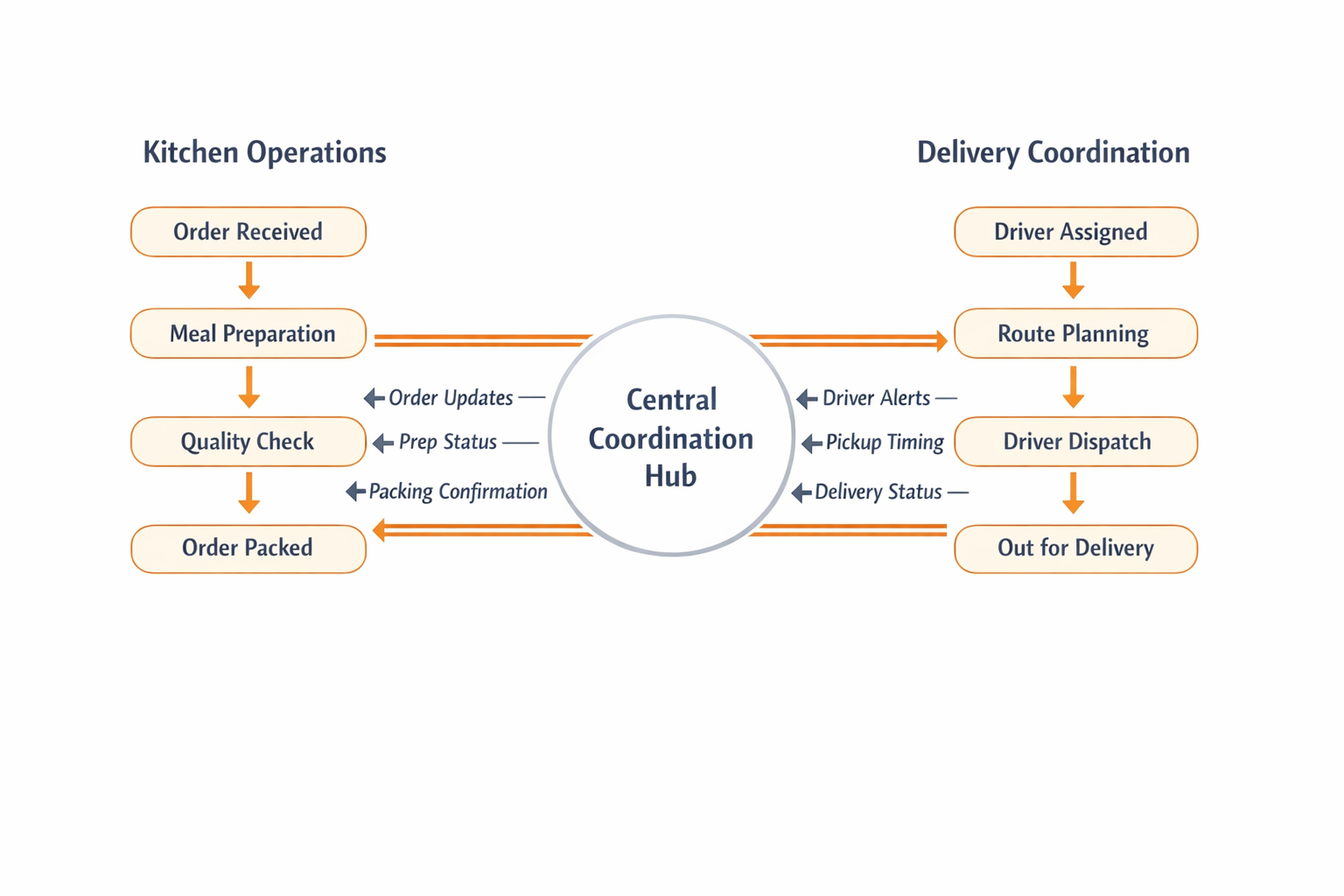
Operational flow refers to the dynamic coordination and communication between different departments within sandwich delivery systems. Unlike the linear progression of delivery stages, operational flow emphasizes the parallel and interconnected nature of departmental activities.
Effective operational flow requires continuous communication, real-time information sharing, and synchronized timing across all departments. When departments work together seamlessly, the entire system operates with greater efficiency and reliability.
Kitchen Operations Flow
Kitchen operations represent the production component of the delivery system. This department manages all activities related to sandwich preparation, from ingredient management to final assembly. The flow within kitchen operations follows a systematic progression while maintaining constant communication with coordination hubs.
Kitchen workflows are designed to optimize efficiency while maintaining quality standards. Production schedules are coordinated with delivery timing requirements, ensuring that sandwiches are ready at optimal times for packaging and dispatch. This timing coordination minimizes wait times and preserves product freshness.
Kitchen operations begin with order intake from the coordination system. Orders are prioritized based on delivery timing requirements, preparation complexity, and resource availability. Prioritization algorithms help kitchen managers allocate resources effectively and meet all delivery commitments.
Parallel to order processing, ingredient preparation teams maintain readiness for assembly activities. This includes measuring portions, preparing components, and staging materials for efficient access. Preparation activities are balanced against anticipated demand to minimize waste while ensuring availability.
Assembly teams transform prepared ingredients into completed sandwiches according to order specifications. Quality verification occurs throughout assembly, with final checks performed before handoff to packaging. Any quality issues trigger immediate communication with coordination systems for resolution.
Upon assembly completion, kitchen teams communicate status updates to coordination systems, triggering packaging and dispatch sequences. This handoff communication includes order completion time, any special notes, and confirmation that quality standards have been met.
Delivery Coordination Flow
Delivery coordination manages the logistics and movement components of the delivery system. This department operates in parallel with kitchen operations, maintaining constant communication to ensure seamless transitions between preparation and transport activities.
Coordination flow involves continuous monitoring of multiple variables including kitchen production status, delivery vehicle locations, traffic conditions, and timing commitments. Coordination teams serve as the central hub for information management and decision-making across the delivery system.
Delivery coordination begins with route planning and optimization. Using destination information, timing requirements, and vehicle availability, coordination systems determine optimal delivery sequences. Advanced routing algorithms consider multiple factors including distance, traffic patterns, and delivery windows.
Based on route plans, coordination systems assign deliveries to specific vehicles and drivers. Assignment decisions consider vehicle capacity, driver availability, and geographic coverage. Dispatch sequences are timed to align with kitchen completion schedules for efficient handoffs.
Throughout delivery operations, coordination systems monitor vehicle positions, traffic conditions, and timing status. Real-time monitoring enables immediate adjustments to routes or timing based on changing conditions. This dynamic responsiveness helps maintain service quality despite external factors.
Delivery coordination provides continuous status updates to all stakeholders. Kitchen teams receive information about upcoming handoff requirements, while delivery personnel receive real-time guidance and support. Upon delivery completion, confirmation is communicated to close the operational loop.
Central Coordination Hub
The central coordination hub serves as the information management center for the entire delivery system. This hub receives information from all departments, processes data to support decision-making, and broadcasts updates to maintain synchronization across operations.
Coordination hubs integrate technology systems, human oversight, and communication protocols to achieve seamless operations. Hub personnel monitor overall system status, identify potential issues before they become problems, and coordinate responses to unexpected situations.
Technology plays a critical role in coordination hub operations. Digital systems aggregate data from multiple sources, provide real-time visualization of system status, and support rapid decision-making. Automated alerts notify hub personnel of conditions requiring attention, while analytical tools support proactive problem-solving.
Communication Protocols
Effective operational flow depends on well-defined communication protocols between departments. These protocols specify what information should be shared, when it should be communicated, and through what channels. Standardized communication ensures clarity and consistency across all departmental interactions.
Communication protocols include both formal and informal channels. Formal communications follow established procedures for status updates, handoffs, and problem reporting. Informal communications support rapid problem-solving and situational awareness through direct contact between team members.
Technology-enhanced communication systems enable instant information sharing and real-time collaboration. Digital platforms provide centralized communication channels, searchable message histories, and automated notification systems. These tools enhance communication efficiency while maintaining complete records of all interactions.
Synchronization Mechanisms
Synchronization between departments is achieved through multiple mechanisms working together. Timing coordination ensures that activities occur in the correct sequence and at appropriate times. Information synchronization keeps all departments operating with current, accurate data. Resource synchronization aligns personnel, equipment, and materials with operational needs.
Timing mechanisms include production schedules, delivery windows, and buffer times designed into the system. These timing structures create predictable patterns while providing flexibility to accommodate variations in actual performance.
Information synchronization relies on integrated technology systems that share data across departments in real-time. When all departments access the same information base, decisions are based on consistent data and misunderstandings are minimized.
Resource synchronization involves matching personnel availability, equipment capacity, and material inventory to operational requirements. This planning ensures that necessary resources are available when needed without excessive waste or idle capacity.
Continuous Improvement in Operational Flow
Operational flow is not static but evolves through continuous improvement processes. Regular analysis of performance data identifies opportunities for enhancement, while feedback from all departments suggests practical improvements. This iterative approach ensures that operational flow becomes more efficient over time.
Performance metrics tracked for operational flow include timing accuracy, communication effectiveness, problem resolution speed, and overall efficiency. By monitoring these metrics, organizations can identify strengths to leverage and weaknesses to address.
Continuous improvement involves testing new approaches, evaluating results, and implementing successful changes. This systematic approach to optimization helps delivery systems adapt to changing conditions and maintain competitive advantage.